Holidays
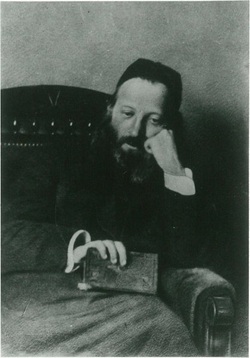
The Joy of the Succah
The succah is a very great joy: to such a degree that it cannot be permanent, but a temporary dwelling.
But it stands in one place, because waves of light expressing that joy pour forth. One wave rises and with no interruption descends, and a second, new wave flows, one which is brighter and more joyful.
It appears as if it is all one succah. But in truth, at every moment and fraction of a moment, there is literally a new succah.
And since the joy is new and the newness is constant, this is “the time of our joy.”
Arpelei Torah, quoted in Moadei Harayah, p. 95
Hakafot in Zoimel
The following is a remarkable story of hakafot on Simchat Torah from the time of Rav Kook’s first position as rabbi of Zoimel:
After shacharis and Hallel, when the people were getting ready for the hakafot, Rav Kook stood and asked them to accompany him outside. There, he began to sing, and danced around the synagogue, followed by the congregants. They circled the synagogue seven times. And then Rav Kook led everyone back into the synagogue.
He stood on the platform and proclaimed: “Dear Jews, those hakafot were in memory of the conquest of Jericho. In the same way, we will reconquer our land. When we will be united and linked as one chain, walls will fall before us, and we will go up to Zion with song, and to Jerusalem and our Temple with eternal joy.”
Hakafot in Jerusalem
The following description of the preparation for the holiday and the joy of the first hakafot in 5688 (1928), was given us by the writing of Rav Chaim Karlinsky:
Hoshanah Rabbah in the evening. The sun is sinking in the west, the shadows are falling, and dusk descends upon the face of the beautiful city. Jerusalem is dressed in a holiday spirit, in honor of Shemini Atzeret.
It is still early, yet there is already a crowd in Yeshiva Mercaz Harav—the yeshiva of Rav Kook. Men and women, dressed in their holiday clothing, their faces shining, push forward, trying to get a place at the front in order to see the hakafot of Rav Kook and his students.
Meanwhile, the students and elite of Jerusalem cluster around Rav Kook in the succah next to the yeshiva. In the atmosphere suffused by an elevated spirit, they listen to the farewell blessing of Rav Kook, as he takes leave of the holy ushpizin with soulful longing. His face Kook shines like a flash of supernal light as he speaks of the holiness of the ushpizin and the holiness of the Torah. His voice is soft and heartfelt. Every word is a song, and every phrase a melody. As the students gaze at his face, their hearts experience a holy trembling.
After the recitation of “Atah hareitah” is finished, the hakafot begin. Rav Kook, the chief cohen, is given the honor of the first hakafah, and he is handed a sefer Torah. Rav Kook stretches out his sensitive fingers and takes the Torah with holy trembling. He brings it to his heart, embraces it in his arms and lifts it to his lips—”the clinging of spirit to spirit”—as his eyes well with tears of joy. He is seen by the crowd, but he does not see them. He unites in his spirit with the Giver of the Torah, from his entire soul and being...
Then he opens his eyes and looks at the Sefer Torah embraced in his arms. He gazes at it for a few moments, and begins to murmur a tune filled with yearning: “my soul is thirsty for You, my flesh yearns for You”; “my heart and my flesh will sing to the living God.”
Like an electric current, Rav Kook’s emotional voice passes through the crowd. A hush hovers over the yeshiva, and the students who stand close to their rabbi fall back. His entrancing song of the spirit pours out calmly, with clinging to God. It makes the heart sing and embraces the soul. Rav Kook’s eyes sparkle and his face shines with the beauty of holiness and its glory. From moment to moment, his enthusiasm grows ever stronger with his song. The longing for God streams forth with the joy of the heart, and he dances a dance of supernal cleaving. His body hovers in the air, his feet touch but do not touch the stone floor, and his soul soars in the world of yearning, filled with the illumination of holiness and God’s Presence.
Rav Kook’s dance and his emotion-filled song inspire the congregation with a stream of enthusiasm, and they draw him with great emotion into a mitzvah dance. The hands of young and old intertwine, they surround Rav Kook and dance in a circle. Then circle grows ever larger and becomes a circle within a circle. Hundreds of feet lift and descend in rhythm, and from the mouths of the dancers bursts a new song: “Rejoice on your holiday, and be only joyful.”
Then, when the hakafot are ended, silence falls upon the yeshiva. Rav Kook speaks of the precious glory of the Jewish soul, filled with light and beauty in its supernal source, and which—only when it unites with the body and its earthly energies—gets entangled in the war of this-worldly life and descends dreadfully. But nevertheless, the people of Israel are holy, and in the joyful moments of a mitzvah, their souls again cling to the original source. Rav Kook speaks of the spiritual connection shared by Israel, the Torah and the Holy One, blessed be His name. He speaks about the holiness of the land of Israel and the generation of revival. His face is aflame and his eyes like lightning...
Suddenly, a new song of great joy breaks through the yeshiva hall: tens of workers and settlers, members of Hapoel Hamizrachi, following their leader, push their way through the crowded assembly.
From the people come outcries: “Silence! Respect! The rav is speaking!” But Rav Kook smiles with heartfelt love, like a father who enjoys the naughtiness of his children. Rav Kook recognizes these “arrogant” people, who work with hoe and trowel, in the field and in construction, and who after a day of hard work sit late in the beis medrash, learning the perfect Torah of Hashem.
And he interrupts his speech and goes forth to great them, joins their song, and again dances in a circle with the sons who are building the land of the fathers, and rebuilding the ruins of Jerusalem.
The dancing settlers cluster around Rav Kook, as beloved to them as their soul, and lift him. One of them cries out, quoting the piyut of Yom Kippur: “Like the sight of the lightning flashing from the angels!”
And in response, everyone replies: “So is the sight of our rabbi, the great cohen.”
“Like the holiness of the holy headband!”
“So is the sight of our rabbi, the great cohen.”
“Like the planet of Venus on the eastern horizon!”
“So is the sight of our rabbi, the great cohen.”
And indeed, like the sight of the cohen gadol, the man of God, holy and pure, was the sight of Rabbi Avraham Yitzchak Hacohen Kook, of blessed memory, at the time that he rejoiced in the joy of a mitzvah: “the joy of the Torah.”
The Three Levels of Hanukkah Observance
On Hanukkah, the sages established that the mitzvah of the Hanukkah menorah may be kept in different forms: the basic mitzvah, mehadrin (beautification) and mehadrin min hamehadrin (beautification of the beautification). This is an approach that applies to no other mitzvah.
After the great spiritual disaster, “when the kingdom of Greece ruled over us,” we were deeply weakened. Then the spiritual power of Mattityahu and his sons awoke. The yearning for governmental independence began to spread its influence, and they proclaimed the freedom of the nation. That proclamation itself had a great elevation and holiness in opposition to the flood of Greek assimilation.
In essence, the yearning for national-governmental independence in itself brings about an opposition to assimilation and absorption into a ruling, subjugating nation.
But without “Your holy cohanim,” who contributed substance to that yearning for self-government, there would be no power to fight and stand firm in the midst of difficult wars. This is what the Holy One, blessed be He, showed us in the miracle of the flask of oil: it was precisely the small flask of the pure oil, sealed with the seal of the cohen gadol, that had the power to illumine and draw a great light into the soul of the entire nation. It was that that contributed the strength to fight and attain victory.
Since there were various levels in people’s desires for the redemption of Israel and in their understanding of the content of that redemption, this mitzvah was established with various levels: the mitzvah itself, its beautification and a beautification of the beautification.
The clear intent of the sages of the generation was to cause the content of holiness to penetrate into all levels and areas of life, despite the Greek culture of assimilation that harmed the foundation of faith. The Greeks had decreed, “Write on the horn of an ox that you have no portion in the God of Israel” (Bereishis Rabbah 2:5), and they had outlawed mention of the name of God.
In response, the court of the Chashmonaim decided to insert the name of God even into contracts (Rosh Hashanah 18b). That is, they decided to insert the flow of holiness even into mundane life, to attain the basis of faith even in physical business affairs. In this way, they would live the verse, “in all your ways, know Him.”
And in this way, the pure light shone in all corners of life: “and to all Israel, there was light in their dwelling places.”
Moadei Harayah, pp. 180-81
The Light of Chanukah
Chanukah contains the influence of the most supernal future days. For this reason, the word Chanukah is in the passive form: it is receiving.
Chanukah expresses the form of all the lights that must shine within the nation: the light of Torah, the light of prophecy, the light of wisdom, the light of justice, the light of strength, the light of joy, the light of kindness, the light of love, and so forth.
Before we are able to recognize the supernal essence of life, these many lights appear to us separately, as though they are fragmented. Sometimes, they must maintain that separate stance so that their union will not annihilate the individual forms.
At times, this separation brings about disagreement. One person may be drawn to a particular light. It seems to him that anyone who turns to the other lights diminishes the character of the light that he so much loves, and whose preciousness he so particularly recognizes.
Because every individual takes pride in strengthening and fortifying that good aspect to which his soul is drawn, there is universal improvement, and increasing betterment.
But these separations will not last forever.
As long as there are such differences in viewpoint, holiness will not gain a basis in the world. The essential blessing is that of peace. And that will exist in the future when everyone has the clear awareness that all the lights, with all their particulars, are really one light.
And so the blessing on the Chanukah candles does not refer to “lights.” This blessing, which raises our consciousness to the most exalted distance, to a most supernal future that is sanctified in the strength of God, refers rather to a single “light” of Chanukah.
Olat Harayah, p. 435
Eight Days
The usual figure that indicates complete comprehensiveness is a week of seven days. The utmost of all that is elevated and of the holiness of the name of Hashem and His good desire in the world will be revealed only in the future—a future to which all varieties of holiness turn. However, the way the force of the future approaches is revealed in the present as well. It will [continue to] be revealed by the wondrous developments of the Jewish people, which comprise a universal riddle to which there is no solution apart from the elevated destination of the future.
That is why the Sabbath is intertwined with the totality of present, continuous time, as it alludes to a day that is entirely a Sabbath of comfort and holiness. This teaches that in the midst of present time, the impression of the future is already prepared and apparent to our senses.
The Greeks sought to blind the light of the world. They darkened the eyes of Israel and filled the world with impulsiveness and hooliganism. This was founded on the principle of taking the image of the present bereft of any future goal. Finally, they influenced the evil sects that came forth from us to say that there is only one world. Because of these sects, in the Temple the phrase “forever” was changed to “forever and ever” (Ber. 54a)—[indicating specifically the spiritual world]. When times are rectified and the eyes of the mind are clear, it suffices to say “forever,” and the future is already within this scope. But because they blackened the light of truth, the future goal must be explicitly stated, even though bleary eyes do not recognize it from the present. Nevertheless, the word of our God will stand forever.
We already know the future goal through prophecy, the inheritance of Israel. It is clear to us even in a time of darkness, when the eyes of flesh cannot concretely see the power of the future in the midst of the present. During a time that is clear and bright, the one statement, “forever,” suffices to include the future as well. [In such a time,] a seven-day Hanukkah would suffice, comprising a comprehensiveness of the present that already includes the Sabbath, which alludes to and prepares for the day that is entirely Sabbath. But at the time of the descent caused by the marauding Greeks, who blurred the clarity of the present so that one could not discern from its midst the glorious future, when the light of Hashem and His honor will be revealed in the world, “and the idols will entirely pass away” (Isaiah 2:18), it became necessary to strengthen the principal Jewish gaze, so that it would not be constricted in the present like that of the Greeks, heaven forbid. [It became necessary] to make Hanukkah eight days—that is to say, one day was added to the usual comprehensiveness of the present, to tangibly indicate that all our goals will be revealed and become real only in the future, when time in its fullness will emerge from its lowliness and the world will be healed from its blindness and evils, both general and particular. That is the goal of Israel and the goal of the light of the Temple. Therefore, “The days of Hanukkah are eight.” As is clearly stated: “forever and ever.”
Ein Ayeh
Two Visions of Holiness
God granted victory to His servants, the cohanim, and they overcame the Greeks. The Greeks had sought not only to uproot the Jewish people in a physical sense but also to uproot that content of life that the Jewish people proclaim to the world, and which must be in accord with the roots of Torah: that the primary goal in family life must be purity and modesty. All other Jewish traits and viewpoints devolve from this. Seeing this, the Greeks they hated it and viewed it as a foe and enemy of their culture. They had set up as their insignia the gaiety of life and its physical and illusory pleasures. And so the Greeks harbored great hatred for the Torah of Israel.
Even if a Jew is not outstanding, but he proceeds on the middle path that governs a Jewish life, the light of Judaism, purity and modesty, the faith and all traits that branch out of this for the good may be recognized in his life. They are recognized and praised by all in the entire house of Israel who act in accordance with the paths of Torah and mitzvos.
Thus, “the mitzvah of the light of Hanukkah is one flame for a man and his wife.”
Then there are outstanding Jews. Their very lives stand ready to impart the experience of the divine holiness, whose seal has been placed upon them by the complete Torah. They are fit to be “the zealous ones who light one candle for each individual.” If such a person is outstanding in guarding his ways well, in accordance with religion and Torah, [then] glory and beauty, and the light of Torah that accompanies him, can be recognized in his life as an individual. In him, the verse is fulfilled: “all the nations of the land will see that the name of Hashem is called upon you, and they will fear you” (Devorim 28:10).
These are outstanding individuals, all of whose paths are weighed on the scale of holiness, so that divine holiness is apparent not only in their general family life but in their individual lives. Amongst them are found holy people the entirety of whose lives is not self-improvement—not even for spiritual goodness, a life of the world-to-come. Instead, the entire burden of their spirit is the fulfillment of the desire of God in His world.
There are two general paths (and each one is divided into two subsections) of how the miracle of Hanukkah awakens the heart of holy people and allows them to follow it to their exalted desire.
There is a great person who looks with a penetrating eye at the desire of God in His world. He recognizes that the Master of all souls created man (in his entirety) in His image, and all beings in the image of God. It must then be that He created [them] to ultimately bestow good upon them, so that they will rise from the depth of evil and foolishness surrounding them and they will all be fit for the stature of those righteous ones who take pleasure in God and His goodness. God has [especially] prepared the Jewish people to receive the divine light in the world. But the goal that gives joy to the heart of all those who are straight-hearted will be complete only when this purpose, being fulfilled by the Jewish people, will [thus] benefit all people of the world with the light of God and a holy life.
From this point of view, the inner inclination that directs the hearts of those whose heart is straight to walk in the way of God, following the Torah, is due not only [to the fact] that it benefits the Jewish people in particular, but because of a more distant and illumined effect: because in the future, the goodness of Israel will bring goodness to all humanity. When such a viewpoint is strong in one’s heart, one can regard an outlook that limits the purpose of Torah deeds as being for the general good of the Jewish people as an outlook not sufficiently elevated, and which needs to rise yet higher and transcend the outlook of a specific love of Israel. To such a person, the source of his life cannot be the love of the [Jewish] nation, but the love of the name of God and His Torah—because in the Torah will be found this final goal, which is so elevated that this person considers the love of the [Jewish] nation [merely] as his means to his exalted goal.
Then there is another path. The heart of this elevated person considers that self-love is not fitting for the most profound state [of being], even if [that self-love] broadens into a love of the entire [Jewish] nation. Rather, it is fitting to love goodness itself. Therefore, one should view this most exalted content of life as the purpose of life in general. Since the divine special quality is hidden in the Jewish people, certainly it is they who are fit to gain perfection to such an extent that their lives should be the envy of all good men—not out of the self-love of a person who cares for himself, but out of the essence of truth and straightness. If this is so, the special quality of the Jewish people should be the center of all spiritual life. And it is this upon which the purpose of the entire Torah should be built.
And automatically, there exists in the feeling, simple heart of love of the [Jewish] nation that which makes [love of the nation] a fitting content in the walkways of the Torah, since, even in line with the depth of divine justice, the ultimate purpose [regarding all mankind] will remain the goal of Israel. This is so because the ultimate purpose is not meant to measure up to the quantity of life but to its quality [unclear]. And that wondrous quality will remain the inheritance of Israel forever because of their having been divinely chosen, and because of their special quality.
[Rav Kook then goes on to develop this idea parallel to the disagreement between Beit Shammai and Beit Hillel. See there.]
Ein Ayeh
A PROFUSION OF LIGHTS
The ultimate goal of Israel is to gaze upon a rectified world under the kingdom of God, when all creatures will be joined together in one confederation for a life of righteousness in the light of God. Corresponding to this, it is understood that the multiplicity of national traits leading to division into many peoples will decrease as the light of truth and the life of righteousness appear. The more that nations approach the content of a life of divine Torah, the more will their separate traits decrease. This is alluded to in the words [of the house of Shammai], “On the first day [of Hanukkah], we light eight candles. From then onwards, we decrease.” The encounter with Greece and the victory of Israel both catalyzed Jewish destiny in relation to the nations of the world to make its way with greater strength, so that the most ultimate and uplifted goal could be connected to the [one] light of Hanukkah.
The house of Hillel agrees that such a Jewish destiny exists. However, [it holds that] the highest life—which is the depth of the Torah’s intent in preparing Israel for its high station—is not [that the Jews will] merely be a tool for the entire world. Rather, the special quality of Israel is higher than anything else intrinsically. To a superficial gaze, the generations grow ever more impoverished—“there is no day whose curse is not greater than its fellow” (Sotah 49b). However, the inner special quality in the totality of Israel is not measured by the worth of every particular generation. Rather, it encompasses all generations, from beginning to end. Every generation that holds firm to the covenant with God—in particular, under the burden of the yoke of exile and great suffering—adds to the general special quality of the existence of this wondrous nation, which has no equal under all the heavens.
The basic principle is that even the great multitude of all the nations acts as a means for that special quality. And so existence will be crowned with [the Jewish nation] in the end of days, when it will be a complete nation prepared for a life of holiness on the highest and most exalted plane.
This value is attached to the Hanukkah candle, which teaches that even the quantitative foundation that has taken significant first steps with the Hashmonaic victory over the Greeks is secondary to the qualitative foundation. “The thought of Israel preceded everything” (Bereishit Rabbah 1:4). Therefore, [according to the house of Hillel], “on the first day, we light one candle. From then onwards, we increase.” The light of Israel grows ever stronger. According to its greatness and might, paths increasingly diverge to every nation, according to its status. This is so even though the more truth shines, the more separation deceases. Nevertheless, natural differences still remain. In accordance with them, the light of Israel divides into particular lights, and their effect over [the nations] increases.
The goal is not that which is recognized by the nations, which are decreasing and coalescing. It is in accordance with the worth welling forth from Israel, which increases differentiation and addition. This [worth] comprises the essential concept: that the special quality [of the Jewish people] constantly adds praise and glory, according to what every generation acquires and gives over to the general [spiritual] treasure house.
At any rate, according to this approach of the house of Hillel, the outlook of Jewish nationalism has a firm basis in truth and in righteousness on the deepest and most ultimate level.
Ein Ayeh
The Entire Torah: Vignettes of Purim
Rabbi Naftali Stern told, “Once on Purim, when Rav Kook was in an elevated state after ‘drinking accordingly,’ he stood up on the table and called out in a loud voice and holy zeal: ‘How can I bear it when I see the destruction of my birthplace?’ (Esther 8:6.). This is the entire Torah.”
In his monthly epigrams, which Rav Kook published in the Eretz Hatzvi calendar (Yaffo, 5674), he wrote, “Those who make mention of the cities and walled towns from the days of Yehoshua bin Nun, will not be able to remain the slaves of Achashveirosh.”
Rabbi Uzi Klachheim elaborates on this epigram, based on the words of the Jerusalem Talmud (Megillah 1:1): “Why was the commemoration date of Purim made dependent on the days of Yehoshua bin Nun? They apportioned respect to the land of Israel.” Rabbi Klachheim writes: “Those who are at the height of their success in the exile, recall the holy land, and raise it to the height of their joy, ‘cannot remain the slaves of Achashveirosh,’ they will not be satisfied with temporary successes in foreign lands, they will pray constantly from the depth of their heart for the return to Zion, for the return of the children to their border.”
Be’er Maggid Yerachim, p. 67