Faith
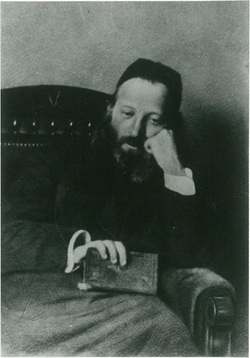
Faith
Not with depression, not with fearfulness, not with sentimental weakness must we turn to the divine light, but with a clear knowledge that what flows from the depths of our heart to approach God is a natural, complete and healthy faculty. It is more than just a natural faculty—it is the basic, natural faculty of our soul. It emerges in us from the soul of the Life of all worlds, from the soul of all existence, of all being.
The more we increase knowledge, increasing spiritual illumination and a healthy physicality, so will this wondrous light shine in us, a lamp on the path of our life.
Orot Ha’emunah, p. 80
The Poem of Life
Generally speaking, faith is the poem of life, the poem of existence, the poem of being.
The poetic spirit is the most deeply penetrating feeling. Within our inner being, it delves most profoundly into the nature of what we aspire to, in a manner that prose cannot achieve.
The true lens of life, therefore, is within the poem of life—but not in merely temporal life, whose expression is prose.
Woe to the person who wishes to deprive life of the glory of its poetry. Such a person destroys the entire content of life and all the truth within it.
Prose has worth only because it rests upon the poetry of life.
Orot Ha’emunah, p. 40
Golden Illuminations
In every song in the world, the holiness of faith expresses its golden illuminations.
When holiness is revealed in the spirit of song in its pure and complete form, that song is truly holy. It is a song that even the holy angels, the angels of God, will sing.
Orot Ha’emunah, p. 40
Loving all People
A person upon whom the light of faith is revealed in its purity loves all people, with no exceptions whatsoever. His only desire is their elevation and repair.
The avenues of their repair become genuinely moral and true in accordance with the expression of faith in his heart.
Orot Ha’emunah, p. 44
The Light of Song
Faith is the song of the upper world. Its source is the divine nature within the depth of the soul, the pleasure of the inner gaze that comes from an infinite gladness.
The finite expression of Torah is built upon the outcome of this holy, supernal song in its actualized limitation.
Those who are filled with the splendor of song suffer at times because of the limited aspect of actual life and its boundaries. Nevertheless, they accept the yoke of the kingdom of heaven. They know that the world rests on measurement, that the light of song must be clarified in finite utensils. They accept this with love, and draw the light of love and song into measure and rule. By means of this patience, they rise; and the world rises with them.
Orot Ha’emunah, p. 88
The Denial and Acknowledgment of Faith
There is such a thing as denial of faith that is like acknowledgment of faith.
And there is also such a thing as acknowledgment of faith that is like denial.
A person may acknowledge that the Torah is from heaven. But his picture of heaven is so distorted that it contains not even a trace of true faith.
On the other hand, a person may deny that the Torah is from heaven. But his denial is based only on what he has learned from believers whose minds are filled with empty and confused thoughts. As a result, he decides that the Torah must have a higher source than that. And so he seeks its source in the greatness of the spirit of humanity, in the depth of ethics and in the Torah’s spirit of wisdom. Although this has not yet brought him to the heart of truth, such a denial is considered acknowledgment. And it steadily comes ever closer to faith.
A confused generation of such people must certainly improve.
This question as to whether or not the Torah is from heaven is merely one example that illustrates all questions of faith, general and particular: the relationship between how they are perceived and their core being, the latter being the goal of faith.
Orot Ha’emunah, p. 25
Too Great a Measure of Faith
In too great a measure, faith destroys the world. This is true not only of false faith. It refers even to true faith, when that faith affects the individual and communal soul more than necessary to bring about a proper balance with other energies, spiritual and this-worldly.
At that point, faith weakens the world.
That is why the world always contains so many factors that diminish faith—despite the fact that the tendency toward faith is so strong. The situation then remains in balance. The world receives the good within faith in proper measure.
This process pertains not only toward faith but also toward wisdom, ethics and every ability. Just as every positive phenomenon has factors that support it, so does it have a unique set of influences that disturb it.
When each case is looked at in isolation, we would think that those factors that support the good help the world, and those that disturb it harm the world. But when looked at in a total context, we see that both of them build the world—the first positively and the second negatively.
Usually, the final generation of an era utilizes negative energy. This is because an era comes to an end when the finest aspect of its spiritual strength has worn out its ability to influence.
Before, it had influenced so much that it had gone beyond its measure. The preponderance of goodness that it had brought had made the world unable to accept it.
Now the world attempts to shatter it.
And so the generation that ends one era and begins the next uses negative energy.
But as soon as that negativity is revealed, its purpose of finalizing matters—of “smoothing the bushel”—is completed. At that point, the weakness and emptiness within the negativity are exposed.
That negativity sets its own limits, which keep it from excessively spreading. The undue expansion of its first appearance now is rectified in the over-all balance.
Nowadays, we see a movement toward denial of faith, as part of a characteristic arrogance of the times. For instance, there is biblical criticism, with its pretense toward scientific authority. On the other hand, there is a revelation of new information that supports faith.
These two constitute the divine symmetry of the balanced spirit of faith.
Orot Ha’emunah, p. 24
Broken Cisterns
We must clearly know that whatever may have something of idolatry in it, if it has any beautiful content—whether physical, or even spiritual—that is only from its superficial aspect. Within, however, there rests the venom of a profound destructiveness.
As for those connected to a foolish faith, the nexus of their connection is to the internal aspect of its content, to that which brings about the influence of that inner evil.
This is because all idolatry recoils from the wellspring of life and goodness, the wellspring of living waters, instead excavating broken cisterns that will provide no water.
Orot Ha’Emunah, p. 5
Faith of a Non-Believer
At times, there may be found an non-believer who has a strong, inner, shining faith that gushes from the holy, supernal wellspring, more than thousands of believers with a meager faith.
This may exist in individuals or in generations.
Regarding all these, the verse declares, “The righteous person will live by his faith.”
Orot Ha’Emunah, p. 21