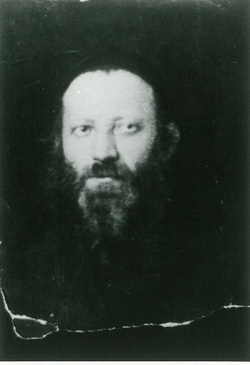
LAND OF ISRAEL

The Land of Israel

The land of Israel is not some external entity.
It is not merely an external acquisition for the Jewish people.
It is not merely a means of uniting the populace.
It is not merely a means of strengthening our physical existence.
It is not even merely a means of strengthening our spiritual existence.

Rather, the land of Israel has an intrinsic meaning.
It is connected to the Jewish people with the knot of life.
Its very being is suffused with extraordinary qualities.

The extraordinary qualities of the land of Israel and the extraordinary qualities of the Jewish people are two halves of a whole.
Eretz Cheifetz I

Exile and Mediocrity

We experience exile and mediocrity because we do not proclaim the value and wisdom of the land of Israel.

We have not rectified the sin of the biblical spies who slandered the land. And so we must do the opposite of what they did: we must tell and proclaim to the entire world the land's glory and its beauty, its holiness and its honor.

Then, after all these praises, let us hope that we have expressed at least one ten-thousandth of the loveliness of that lovely land: the beauty of the light of its Torah, the exalted nature of the light of its wisdom, and the holy spirit that seethes within it.
Eretz Cheifetz

The Letters of Our Soul

In the land of Israel,
Grow the letters of our soul.
There,
They reveal illumination.
They draw down mighty life
From the blaze of life
Of the Congregation of Israel.
Eretz Cheifetz, p. 24

The Land of Israel

 The more difficult you find it to tolerate the atmosphere outside the Holy Land and the more you are aware of the unclean spirit of an unclean land, then the more have you intimately absorbed the holiness of the Land of Israel.
Eretz Cheifetz (Orot, Eretz Yisrael 6)

Lucid and Clear

 The imaginative faculty of the land of Israel is lucid and clear, clean and pure, and suitable for the appearance of divine truth...

 On the other hand, the imaginative faculty in the lands of the nations is turbid, mixed with darkness, in the shadows of impurity and corruption.
 Eretz Cheifetz (Orot, Eretz Yisrael 5)

Our Love for the Beloved Land

We have a great obligation to awaken the ancient love of Zion: a love that is eternal and burns in a flame of holy fire within the hearts of the Jewish people wherever they may be.

We must fight with all our strength against any hatred of our holy land-which has begun to affect some of us. With a mighty arm of the spirit and with the eternal holiness of the beloved land, we must destroy the contamination of the spies, a contamination which began to spread at the very point of the possible redemption.

"The word of our God will stand forever."

The holiness of the land and its loveliness has never changed and will never change. All the bitter circumstances, physical and spiritual, which have affected the Holy Land will not overcome it.

Just as no physical destruction can destroy our love for the beloved land, so can no spiritual desolation reduce our holy and profound love of that land of life.

The deep connection between the soul of the Jew and Zion, with all that takes place there, stands firm forever. And the light of that love will increase seven-fold.

It will enflame every heart and exalt every spirit, sanctifying and encouraging everyone.
Moadei Harayah, pp. 419-20

The Wisdom of the Land of Israel

Exile and degradation are drawn into the world because we do not proclaim the worth and wisdom of the land of Israel. We do not rectify the sin of the spies who slandered the land. Measure for measure, we must tell and proclaim, across the entire world, its splendor and magnificence, its holiness and glory.
 
If we are worthy, after our most extravagant praises, we might express one ten-thousandths of the desirability of that desirable land, the magnificent light of its Torah, the glorious light of its wisdom, and the holy spirit effervescent within it.
Eretz Cheifetz, p. 38

The Sense of Being a Stranger

There is a sense of being a stranger that you may feel outside the land of Israel.
That sense connects the entire inner desire of your spirit ever more strongly to the land of Israel and its holiness. Your hope to see it grows. The impression, the inner image, of the holy structure of that land upon which God always gazes grows increasingly deeper.
There is a depth of holy yearning for beloved Zion, a recollection of that entirely desirable land. When that grows in even a single soul, the wellspring flows for everyone: for tens of thousands of souls connected to that soul.
Eretz Cheifetz (quoting Orot), p. 48

A Powerful and Ancient Nation

The basis of keeping all the commandments, from the aspect of their inner and ultimate being, can take place only in the land of Israel.

Those commandments not specifically related to the land of Israel, which apply as well outside the land, are not intended to attain to their ultimate purpose outside the land.

Rather, they bring the Jewish people to the land; they guard our holiness, so that when we return, we will not need to begin from nothing, like a young nation which only recently has come to the altar of life. They will ensure that our path in life-eternal and temporal-will be firm before us, as is proper for a powerful and ancient nation, whose sources are primal, from the beginning of the world.
Eretz Cheifetz, p. 31

The Life of the Jewish Nation

The encompassing, spiritual, inner revelation in the depths of the Jewish soul sets before us the inner form of all of the practical Torah: a form that is ideal, and which contains all the practical Torah's details.

The entire sweep of the oral Torah with its tributaries flowing as one is the life of the Jewish nation, as it flows from a supernal source, united as a solid element.

From the impression left by this soulful revelation, we come to a more exalted uplifting. We increasingly rise, and the supernal levels of the holy spirit continue to be revealed.

All this is in accordance with our diligence in learning Torah, performing good deeds and elevating our character, and the illumination that comes from clinging to God in a spirit of supernal consciousness.
Orot Hatorah 11:1

The Source of Delight

In the land of Israel, it is possible to draw the joy of holiness from the site of joy itself. Outside the land, however, it is impossible to draw down this joy, because of the opposition and wrath of the powers of judgment outside the land. We can draw down this joy only by drawing it from the source of delight, where neither obstacle nor damage reach. This is why, in consequence of the destruction of the temple, "joy" is halachically forbidden, but those things called "delight" are allowed.

When we delight in love from the delights of the source of holiness, there descends a pure joy, enriched with delight, which draws the atmosphere of the land of Israel-to some degree-outside the land, to revive the spirit of those who hope for the mercies of God, who yearn to see it and to rejoice in its joy.

"Recall me, Hashem, when you desire your nation, visit me with Your salvation...to rejoice in the joy of your nation, to take pride in Your inheritance" (Psalms 106:4-5).
Orot Hakodesh III, p. 187

The Unique Quality

The unique quality of the land of Israel and the unique quality of the nation of Israel are complementary. The nation of Israel has the unique ability to come to a divine elevation in the depths of its life-force. Correspondingly, the land of Israel-which is the land of God-improves the Jewish nation that dwells upon it as its eternal inheritance, an inheritance sealed with a covenant, a vow and a promise. The Jewish people's eternal nature is founded upon the divine nature permanent in the imprint of this wondrous desirable land, which is united with the people whom God has chosen as His special ones. Together, the soul of the people and the land bring to the fore the foundation of their being. They demand their goal: to bring their holy yearning to fruition.
Eretz Cheifetz, p. 7

The Gold of That Land Was Good

"'And the gold of that land was good'-this teaches that there is no Torah like the Torah of the land of Israel" (Bereishit Rabbah 16:7).

In every generation, it is fitting to have great love for the Torah of the land of Israel. This is particularly true now. We must give our generation the life-giving medicine of the Torah of the land of Israel. We must show this generation the greatness of truth and clarity found within our Godly treasure, in the ideas and insights of the true Torah, in the beauty and exalted nature of its mitzvos, and in its overall view of life. This can be achieved only via the light of the Torah of the land of Israel, via its depth and breadth. Only that connects all one's awareness and ideas so that one can completely experience it and, more, transfer that experience to others. All of this is possible only via the light of the Torah of the land of Israel.

Our generation is ready. It must be influenced by ideas that have a fresh life and greatness. Shriveled, small matters can no longer capture its heart. Its communal nature has grown exceedingly. We must give everything to this generation in an inclusive fashion: a stream of the flow of life of the entire nation.

This brings us to the essential difference between the Torah of the land of Israel and the Torah of chutz la'aretz (outside the land of Israel). Whatever is small and individual (whether in the general context of spiritual ideas or, more particularly, of those ideas that deal with the great breadth of Torah and faith) when viewed from the perspective of the Torah of chutz la'aretz becomes great and inclusive as soon as it draws to itself the atmosphere of the land of Israel.
The Torah of chutz la'aretz is only aware of how to care for the individual, for his spiritual and physical completion, his temporal as well as eternal condition. But the Torah of the land of Israel is concerned with the totality, with the nation: with its soul and energy, its body and spirit, its total present, its total future, and the living imprint of its past-simultaneously. All details enter it and are subsumed in its exalted state. This is the inner renewal, deep and broad, of the Torah of the land of Israel. It declares that all individual thoughts and ideas proceeding in an impoverished and scattered state-the atmosphere of the land of other nations-must form one bundle, must clothe themselves in one general intent related to the life of the entire nation, under the influence of the land of Israel.
Chevyon Oz, quoted in Moadei Harayah, pp. 157-8

Where are We Going?
by Simcha Raz

As a child, Avraham Yitzchak Kook thought up a unique game to amuse himself and his fellow cheder-pupils. During recess, the small children would line up in rows with their bags over their shoulders, as though they were about to go on a long journey. Little Avramele would lead them. They would ask each other: "Where are we going?," and he would reply: "To the land of Israel!"
Malachim Kivnei Adam

In Berlin

The writer, Avraham Rivlin, tells:

When Rav Kook was in Berlin, he stayed in our house on August Street. I was then a small child, but I remember that Rav Kook spent most of his time in a room that had been set aside for him in our house, and that many people came to visit him there. Afterwards, I heard from my father that the wealthy Jewish community in Berlin tried to persuade Rav Kook to move to a kosher, first-class hotel at the community's expense. But Rav Kook replied to the community leaders that he preferred to stay in the house of a Jew from the land of Israel.
Likutei Harayah, p. 71

The Mountains of the Land of Israel
by Haim Lifshitz

Rav Yitzchak Hutner told:

I once took a walk with Rav Kook and another man amidst the mountains of the land of Israel.
Rav Kook told how impressed he was by the landscape.

The other man asked him, "But you were in the Alps. What is so special about these mountains?"

Rav Kook replied, "The Alps didn't speak to me."
Shivchei Harayah, p. 195

God Willing
by Haim Lifshitz

Someone once told Rav Kook, "God willing, we will move to the land of Israel."

Rav Kook replied, "God is certainly willing. What counts is that you be willing."
Shivchei Harayah, p. 208

The Dirt of the Holy Land
by Simcha Raz

Yigdal Gal-Ezer (a brother-in-law of the author) was a government official who used to visit Rav Kook at his home. On one of his visits, as Rav Kook was submerged in the study of a Talmudic passage, there was a hesitant knock at the door. The door opened slightly, and a short Yemenite, his hair and beard grizzled white, stepped into the room. He closed the door behind him and remained standing in the doorway, his face to the ground, as though he were afraid to look at Rav Kook.

Rav Kook looked up and told the man in a pleasant tone, "Come closer, my son."
Slowly, the man stepped toward Rav Kook's desk, his face still to the ground.

"What is troubling you?" Rav Kook asked him.

"Honored rabbi," the man said hesitantly, "I have come to ask an important question."

"Please ask."

"For twenty-five years," the man said, "I have worked hard, morning to evening, uprooting weeds from orchards, planting saplings, digging up rocks, and excavating to build houses. But after all that, I still barely make enough money to support my family. I would like to ask: Would I be allowed to leave the Holy Land and move to America? Perhaps I will be more fortunate there, and I will be able to support my family more honorably."

For a few seconds, Rav Kook sat quietly, thinking. Then he stood up, pointed at his chair and told the man: "Sit!"

The man began trembling, and stammered: "Honored rabbi, no one else may sit upon your chair!"

But Rav Kook again commanded him: "Sit!"
 
With small, hesitant steps, the man circled the desk and sat down on Rav Kook's chair, still trembling. And as soon as he sat down, his head drooped onto Rav Kook's desk and he fell asleep.

A short while later, he awoke, seeming very moved.

"What happened when you fell asleep?" Rav Kook asked him.

The Yemenite Jew replied: "I dreamed that I was leaving this world. When my soul rose up to heaven, an angel at the gates of heaven directed me to the heavenly court. At the front of the court were the scales of justice.

"Suddenly, horse-drawn carriages rode up, filled with all sorts of packages-small, medium-sized and large-and angels began to put them onto one side of the scale, which dipped down lower and lower, until it almost touched the floor.

"I asked the angel who was standing at my side, 'What are these packages?'

"The angel replied, 'These are the sins that you committed on earth. In the end, everything is taken into account.' I was shaken.

"Then, other horse-drawn carriages rode up, heavily laden with clumps of earth, stones, boulders and sand. And now the angels loaded all of these onto the other side of the scale, which began dipping down.

"'And what are those packages?' I asked the angel.

"He answered, 'Those are the stones, boulders and dirt that you removed from the Holy Land. They will defend you regarding the part that you have taken in building the land.'

"Trembling, I stood and gazed at the side of the scales where my merits were being placed. The scale went down little by little, until it was only a tiny bit higher than the scale of guilt."

When the man finished speaking, Rav Kook replied, "You see, my son, your question has received an answer from heaven." And Rav Kook said no more.
Malachim Kivnei Adam

The Sanatorium
by Simcha Raz

An American Jew, who came to the land of Israel due to the influence of Rav Kook, initially intending to settle there, reconsidered and decided to leave, and came to Rav Kook to take his leave.

Rav Kook asked him, "Why are you leaving?"

"Rabbi, I am tired of the life here in the land of Israel. I can't stand the irreligiosity, desecration of the Sabbath and of the religion that has spread through the pioneers and the different groups. And that is why I have decided to leave the land of Israel and return to America."

These words, that came from the mouth of a sincere Jew in the midst of his turmoil, deeply upset the heartstrings of Rav Kook. But he held himself back, and with a smile asked him where he lived in America.
 
"I live in Denver, Colorado," the American Jew replied. And with a patriotic pride, he began to describe the city and its beauty to Rav Kook: "It is surrounded by mountains, its atmosphere is clear and pure." He added, "There are no little, dirty streets, as there are here in Jerusalem. There the streets are broad, the houses are large and beautiful, electric lights light up the whole city...." And he continued speaking about the natural beauty that surrounds the city of Denver.
Rav Kook interrupted him and said: "It seems to me that in Denver there are many people who suffer from tuberculosis. I heard from someone who recently returned from there, that he himself, when he was in Denver, met many people with chronic, serious disease, without any hope of a cure. And if, as you say, Denver has such a healthy atmosphere, why does it have so many sick people?"

The American Jew replied, "Does the rav believe that those sick people are natives of Denver? They come from other cities that doesn't have a good atmosphere, where they grew ill, and on doctor's orders, they came to Denver to breathe its air and get better. Obviously, some of those who come have long[-standing diseases, because they had delayed coming to Denver. Their lungs are already badly damaged and they are practically beyond hope. When it comes to such sick people, it must be, that Jew you spoke to met on the streets of Denver, and he simply thought by accident that the city is responsible for their chronic diseases. That simple person didn't know that that city, with its healthful atmosphere, has healed thousands of people who came there from across the country."

Rav Kook replied to the man, "Listen to what you yourself are saying! The atmosphere of our holy land also gives wisdom and heals, and to it have come and continue to come poor Jews from all the lands of the exile, whose atmosphere influenced their souls badly, poisoned their souls, and they might have, heaven forbid to assimilate amidst the gentiles and to die a spiritual death in a foreign land. But the Healer of the sick of the nation of Israel made the cure before the disease, and breathed into them the breath of life and love and yearning for the land of Israel, and they come to this place of health and breathe the atmosphere; and if you see so many ill people, spiritually ill in our holy land, they were born outside, and if they hadn't come here sooner, they would have assimilated there. They are seriously ill, but with their coming here, we must treat them, just as people with tuberculosis are treated in Denver. And I completely believe that the air of the land of Israel will influence many of them to good and to blessing, and to the health of their body and soul."
Malachim Kivnei Adam, pp. 400-01

Political Profit
by Rabbi Shmuel Aharon Shazuri

Rabbi Shmuel Aharon Shazuri (Weber), secretary of the chief rabbinate, tells:
After the pogroms of 1920 [5680-81], the Arab rioters were given light sentences. At the same time, new restrictions were placed on Jewish immigration.
 
When Herbert Samuel, the British chief representative, asked Rav Kook for his opinion, he replied, "Why does the Torah only fine a thief double payment, in contrast to man-made laws, which are stricter? The reason is that the thief endangers his life: he knows that if he will be found breaking into a house, he is liable to be killed. Nevertheless, this does not deter him. And so, if the Torah were to threaten him with an equivalent punishment, he would not be deterred from robbing a second time. But he does take a monetary punishment seriously, because that endangers his purpose.

"Therefore," Rav Kook continued, "what upsets me is not that the Arab rioters are given light sentences, but that they gain political profit from their actions. In my opinion, the sole punishment that can deter them is a political loss, for that would endanger their purpose."
Malachim Kivnei Adam, p. 155

United to Do Your Will
by Avraham Kav

After Yom Kippur of 1928, when the British Mandate government interfered with the prayers at the Kotel, Rav Kook stated, "Come and learn how we relate to the nations of the world and how they respond to us. On the Days of Awe, we pray, 'Place Your awe on all Your beings...May all beings fear You and all creatures bow before You, and all be united to do Your will with a full heart.' And at that moment, when we pray that the entire world will recognize God, the gentiles come and interfere with our prayers, which are being recited on their behalf."
Malachim Kivnei Adam, p. 167

A Divine Right
by Simcha Raz

In 1929, the Arabs, supported by the British authorities in the land of Israel, were attempting to deny Jews the right to pray before the Western Wall.

When Rabbi Kook appeared before a commission set up to deal with the matter, he turned to the head of the commission and said in a trembling voice:

"What do you mean by saying that this commission will decide who has ownership over the Western Wall? Does this commission or the league of nations control the Wall? From whom have you received permission to decide who owns it? The entire world is the possession of the Holy One, blessed be He, the Creator of the world. And the Holy One, blessed be He, gave the nation of Israel possession of the entire land of Israel, including the Western Wall. No power in the world, no League of Nations and not this commission can suspend this divine right."
The commission head commented that almost two thousand years had passed since the Jews had possessed the land of Israel, including the Western Wall. To this, Rav Kook replied quietly and calmly:

"In Jewish law, there is a concept of an owner's giving up his right to his property-including his land. But when a person's land was stolen from him, and he protested and continues to protest, his rights never expire."
Malachim Kivnei Adam, p. 179

Scenes From A Life
by R. Moshe Tzvi Neriah

On the 17th day of Av, 5689 (1929), the Arab pogroms broke out. Because the leaders and officers of the Jewish community were out of the country at the fifteenth Congress in Zurich, the authoritative figure who represented the Jewish community at that time was Rav Kook.

On the 18th of Av, on the Sabbath, he telephoned the British authorities and demanded that they take aggressive steps against the pogromists. When John Locke asked him, "What can we do?," Rav Kook answered, "Shoot the murderers!"

When Locke responded that he didn't have the orders to do so, Rav Kook told him, "I order you to do so in the name of human conscience!"

When the Wall Commission met in the land of Israel (5690, 1919-30), the heads of the Jewish organizations presented the commission with a document in which they expressed doubt about the right of Jews to pray alongside the Western Wall, and offered to give up their rights to it.
Rav Kook responded to this document thunderously:

"God forbid! The nation of Israel does not have the power to renege on its right to the Western Wall. We have no right to do so! If, heaven forbid, we give up the Western Wall, God will not want to give it back to us."
Mishnat Harav

The City of Hebron
by Simcha Raz

In the major essay of Haheid (Adar 5690), the author-editor, R. Binyomin (under the pseudonym, Y. Ish-Sadeh), described an assembly of public mourning in Jerusalem half a year after the Hebron pogroms. He reported the trembling speeches, and in particular the exalted words of Rav Kook:

It was the twentieth of Shevat, exactly a half year since the burial of the martyrs of Hebron. But the Yeshurun Synagogue was completely filled. People crowded the seats and stood between the seats. Outside, masses stood on the sidewalk in front of the synagogue....

Amidst the crowd were refugees of Hebron, those mourners before whose eyes the murders had taken place. And all this strengthened the feeling of pain and sorrow.

Rabbi Yosef Halevi led the afternoon prayer in a low voice. When he came to the mourners' kaddish, the refugees of Hebron stood and cried in voice that pierced the heart: "Yitgadel veyitkadesh shmei rabbah...."

Rabbi Slonim of Hebron, who had lost his beloved son, daughter-in-law and all their children save one, stood up. In measured words filled with sorrow, he opened the meeting in the name of the refugees of Hebron. A half a year had not healed the wound. The murder and destruction had not yet been rectified. Neither the government nor the leaders of the Jewish community had done anything to restore Hebron. This gathering must report the outcry of Hebron to all Jews....
Then Rav Kook spoke: The martyrs of Hebron do not need a eulogy. Neither we nor the entire Jewish people can forget the supernal, pure martyrs, shining like the brightness of the sky, who were murdered and killed by unclean murderers and criminals. But we are obligated at this time to recall, and to announce to the people of Israel that we will not forget the city of our forefathers and that we will understand what it means to us.

"The acts of the forefathers are a sign for the children." When the weak-hearted spies came to Hebron, they were afraid because of the strong nation dwelling in the land. Then, "Joshua silenced...and said: Let us go up and inherit it, for we can surely overcome it" (Numbers 13:30). We too, despite the terrible disaster that occurred to us in Hebron, proclaim openly to all that as our strength was then, so is it now. We will not be moved from our place and from our ideals. With greater might and greater strength, we will return to Hebron, for there are we rooted. It is the city of our forefathers, the city of the Machpelah, the city of David, the cradle of our kingdom, one of the refuge cities.

We say, "He hangs the earth upon nothingness." The foundation of [seeming] nothingness is the strongest element-"not like our Rock is their rock." Certainly, we are obligated to weigh our actions with intelligence and thoughtfulness, in a careful and orderly manner. We can assume that the activists who are dedicated to the idea of the rebuilding of Hebron know what lies before them.
 
And whoever weakens the hands of the builders with the claims that they have no foundation, whoever mocks and says, "What are these pitiful Jews doing?," whoever does not help rebuild Hebron is damaging the root of our nation and will have to give an accounting. Now that criminals and evil men have repaid us evil for good, we have but one unassailable reply: the Jewish community of Hebron will be rebuilt, with God's help, in honor and beauty!
Despite the terrible disaster that was poured out upon the Jewish community in Hebron, we must proclaim as Caleb ben Yefuneh proclaimed in his day: "Let us go up and inherit it, for we can surely overcome it" (Numbers 13:30).

The inner character of Hebron is: strength and awakening in the might of the Eternal One of Israel.

And just as that strong Jew, Joshua, proclaimed years later: "I am still strong today-as my strength was then, so is it now" (Joshua 14:11), so must we rise and proclaim openly to all that as our strength was then, so is it now. We must rebuild Hebron even more, with greater strength, out of a concern for the peace and security of every single Jew. With the help of God, we will merit to see Hebron rebuilt upon its site, quickly and in our days.
Likutei Harayah

To Visit His Palace
by Simcha Raz

In the 1920s, the Arabs were attempting to prevent Jewish access to the Western Wall, and the Mandate Government instituted temporary restrictions. The Jewish Investigatory Committee proposed that Jews ceased going to the Western Wall until its status would be resolved. Rav Kook published a strong response to this proposal:

"I do not agree to a cessation of visits to the Western Wall, even temporarily. It is impossible that the testimony to the holiness of the Wall that is made by our visits, and prayers and tears there, since the destruction of the Temple, be interrupted. Until now, the Arabs and other nations who had controlled the Land have recognized our right to the Wall, which is carved from the depth of our souls, and they have not dared interrupt visits and prayers at this holy site. Even a temporary cessation of visitation may be turned in the hands of our opponents into a false proof against us before the present authorities. Heaven forbid that he show weakness in regard to the sanctity of the Wall, in opposition to the true reality that the holy, eternal love and inheritance of our forefathers to the sanctity of the remnant of our Temple is carved forever like a seal upon our hearts."
Malachim Kivnei Adam, pp. 180-81

If I Forget Thee, Jerusalem
by Simcha Raz

Yosef Sharvit tells that during the controversy in at the end of the 1920s over control of the Western Wall, the judge, Mordecai Elias, presented the question of possession in an ambiguous form. On the one hand, the Jewish community does not demand control of the Western Wall, only free access to pray next to it. On the other hand, the terms of ownership and control do not apply to a holy place such as the Wall. This approach was based on appeasing the non-Jews without denying the rights of the Jewish people....

But when Rav Kook learned of this, he protested and opposed it with all his strength. "Heaven forbid! We have no right to do so. The nation of Israel has not given us the authority to give up the Western Wall in its name. Our possession of the Wall is a divine possession. It is with that right that we come to pray there."
Malachim Kivnei Adam, p. 178

One Proclamation
by Simcha Raz

My nephew, Rabbi Shlomo Kook, tells:

In the summer of 5690 (1930), the Arabs demanded that the Jews withdraw any claim of rights to the Western Wall. They threatened that if not, they would resume their riots and pogroms. Rav Kook sat at a meeting with the heads of the various Jewish communities, among them Zalman Rovshov (who would change his name to Shazar and later become President of the State of Israel).

They discussed issuing a proclamation regarding the sanctity of the Wall and its uniqueness to the Jewish people. Zalman Rovshov-Shazar proposed that two proclamations be issued: one from the religious circles and one from the more general populace.

Rav Kook said nothing.

Later, he was brought a proposed version of proclamation for the religious circles. Only then did he say to Zalman Rovshov-Shazar that he wants only one proclamation, one version, in the name of all the Jewish people. He said, "There are people who are musically gifted-some have a musical education and others do not. But even those who have not been musically trained feel echoes in the depths of their hearts when they hear certain tunes. Our relationship to the Western Wall is one of the Jewish motifs that arouses the heart of every Jew, whoever he might be. And therefore, the proclamation must be one."
Malachim Kivnei Adam

Rav Kook And The Kotel
by Prof. Haim Lipschitz

In the summer of 6690 (1930), the Arabs demanded that the Jews give up their rights to the Western Wall, the Kotel. They threatened that if the Jews did not acquiesce, they would continue carrying out pogroms.

The Zionist Committee, the Jewish Agency and the National Committee all favored giving up Jewish rights, and they attempted to persuade Rav Kook to agree to this, to his sorrow.
At that time, Rav Kook and his family were on vacation in Kiryat Moshe, which was then a suburb of Jerusalem. A Jew from England, who had a large house in the neighborhood, had lent it to Rav Kook's family.

Together with Rav Kook was his shamash, Rabbi Meir Dovid, a Karliner Hasid who served Rav Kook like a Hasid serving his rebbe. There was also a talented young man from Germany who was drawn to the teachings of Rav Kook and who wanted to translate Orot Hateshuvah into German.

One day, Rabbi Tzvi Yehudah, the son of Rav Kook, sat in a room studying Orot Hateshuvah with this young man. Following the morning prayers, Rav Kook had lain in the bedroom the entire day, in weakness and sorrow, due to the troubling situation.
Suddenly, Rabbi Meir Dovid broke into the room where Rabbi Tzvi Yehudah was sitting with the young man and said, "Doesn't it bother you? You know what is happening here, what is going on here! And now So-and-so (one of the community leaders) is here and he is bothering Rav Kook regarding the Kotel. Don't you know the sorrow that this is causing the Rav?"
That leader, accompanied by another well-known man, was sitting with Rav Kook and attempting to persuade him that it was correct to give up the Jews' rights. But Rav Kook stayed firm.

When they left the Rav with nothing, Rav Tzvi Yehudah turned to them emotionally and said, "This is murder! You know how much pain this causes the Rav!"

One of the men was insulted, and he responded, "I have never murdered anyone." Rav Tzvi Yehudah answered, "I did not call you a murderer, but this behavior has something of murder in it."

After the men left, Rav Tzvi Yehudah returned to learn Orot Hateshuvah with the young man. But soon afterwards, Rabbi Meir Dovid again burst in and announced that one of the men had returned in order to persuade Rav Kook to take part in a meeting of the National Committee regarding the Kotel, and that the man had already gone out to telephone the National Committee office.

Rabbi Tzvi Yehudah ran to the house that had the only telephone in the neighborhood, where he found the man standing at the telephone. Rabbi Tzvi Yehudah yelled at him, "It will never be! The Rav will not go with you to a meeting about the Kotel."

The man was taken aback, and over the phone he told the National Committee that there would be no meeting, because Rav Kook's family was not allowing him to participate.
Because Rav Kook did not go to the National Committee, a few National Committee members came to him and argued that it was standard British government practice to obtain the Chief Rabbi's signature in such a matter, and that the well-being of the Jewish community depended on giving in, for the Arab mufti was threatening further pogroms.

They argued with Rav Kook for hours, constantly repeating, "The existence of the Jewish community depends on this!" But Rav Kook stood firm. He explained that from the most basic practical point of view, giving up our rights would not help the situation.

Rav Kook was filled with sorrow and worry, and his health was affected. But he did not move from his position.

After a day or two, another known community leader came to plead with Rav Kook. How could Rav Kook be so cruel when the very existence of the community was at stake? But this too did not influence Rav Kook. The next day, another well-known leader came and asked Rav Kook to have pity on the community and reconsider the situation. But he too did not persuade Rav Kook.
And another leader came and said, "There is no choice, the entire life of the community depends on this." And one leader proposed various types of compromise-but with no result. Rav Kook did not change his position: we do not cede rights to the Kotel!
Shivchei Harayah, pp. 238-40

Jewish Pride
by Simcha Raz

In Av, 5689 (1929), the Sixteenth Zionist Congress convened in Zurich. At that time, there broke out the bloody pogroms in the land of Israel-while the majority of the Jewish leaders were absent....During these events, hundreds of Jews were killed and injured by Arab rioters, particularly in the community of Chevron.....

At a meeting between the British Secretary, Lock, and Rav Kook, Lord Lock told Rav Kook, "You Jews may defend yourselves, but do not attack others."

Rav Kook replied, "You who violate the commandment 'do not murder,' do not teach us ethics! The Talmud teaches, 'he who comes to kill you, rise up and kill him.'"

This proud stance made a great impression on the entire Jewish world. Avigdor Hemeiri testifies: "If not for this one man, completely unique, who stood at the post of our national and individual honor, then we would also have been mourning the death of our self-respect."
The news of Rav Kook's response spread quickly throughout the Jewish community and aroused a stir. While many praised the passionate and proud response, others criticized Rav Kook, particularly out of fear that Lock would take revenge on the Jewish community, which depended to a great degree on his mercy. Whenever Rav Kook appeared somewhere, immediately two camps formed, arguing loudly for and against Rav Kook.

Soon after this event, Rav Kook was invited to a circumcision and a heated argument over this matter broke out. When Rav Kook saw this, he signaled to his shamash, Rabbi Meir Dovid Shotland, who was a smart and learned Jew, to calm the people down.

Rabbi Meir Dovid stood up and called out, "People! Very soon the new-born infant will be brought in and we will all greet him by standing up and saying, Boruch Haba: Welcome is he who comes. I have two questions regarding this. First of all, why do we not greet a bar mitzvah boy or a bridegroom, who can understand what we are saying, with the same greeting? And secondly, why is it that after the circumcision, we do not take leave of the baby by saying 'Blessed is he who leaves'?"

Silence fell over the group. Rabbi Meir Dovid continued: "Now I will answer these two questions. To our sorrow and humiliation, Jews are impressed by every uncircumcised non-Jew and show him honor at every opportunity, whether or not he deserves it. That is why we rise to greet the child-for he is not yet circumcised, not yet brought into the Jewish covenant. But once he is circumcised and becomes a Jew, we no longer treat him with any particular respect. And thus we do not say 'Blessed is he who leaves.'"
Malachim Kivnei Adam
 
National And Religious Conscience-A Historical Episode
by Shmuel Hacohen Avidor

The British government issued a decree stating that the Moslems were the legitimate owners of the Kotel but that, since the Jews had prayed there for years, they had the right to continue doing so. Nevertheless, the administrator of the Jerusalem district directed that no more chairs and benches be brought to the Kotel, and he also forbid the beadle's customary lighting of a "Lux" candelabra in the vicinity every Sabbath eve.

Rav Kook was very upset by these developments. He protested sharply to the chief secretary, John Locke, accusing the British government of caving in to Arab agitators. He wrote bluntly to the government, "We will in no way reconcile ourselves to the thievery of this remnant of our Temple." In response, Locke telephoned him and warned him not to continue his activity in regard to the Kotel. The following conversation ensued between the two men:

Locke:                I advise you to retract your letter.
Rav Kook:        Until your government withdraws its statement that the Western Wall is the property of the Moslems, I will not withdraw from my position.
Locke:                I regret that I must warn you that your letter will be interpreted as instigating unrest.
Rav Kook:        There will indeed be no peace if we are not allowed to pray alongside the Western Wall.
Locke:                If so, I will hold you responsible for anything that might occur.
Rav Kook:        The only party responsible for all of this is the government that has surrendered to Arab pressure and is aiding those who rob us of our rights.
Locke:                Are you aware that with this position of yours, you are liable to sow confusion amidst the Zionist leadership? Telephone them first. Or are you acting as a lone party?
Rav Kook:        I am acting in accordance with my national and religious conscience. I will not be silent and I will not rest as long as our right to pray alongside the Western Wall is interfered with.
Locke:                If that is indeed your position, I can only regret it.

With this, the conversation came to an end. The arrogant British official, who had hoped to intimidate Rav Kook into ceasing his efforts, hung up the phone furiously. Rav Kook hastened to return to the letter he had been composing and began to compose new telegrams to the great Torah leaders across the world, urging them to protest against the infringements of the Mandate Government upon the Jews' right to the Kotel.
Ha'ish Neged Hazerem
 
The Air
by Prof. Ch. Lifschitz

A leading Diaspora rabbi who made aliyah and served as a rabbi in the land of Israel disagreed with Rav Kook on various matters, particularly in regard to the shmittah year.

One time this rabbi came to Rav Kook and said to him, "When you lived in Boisk, I knew you as a complete righteous person. But now what has happened to you?"

Rav Kook replied, "There you had some understanding of me. But now that I have ascended to the land of Israel, you no longer comprehend the justice of my actions."

The rabbi protested, "But I too am in the land of Israel!"

To which Rav Kook replied, "I am in the land of Israel and breathe its air; but although you are here too, you are breathing the air of the diaspora."
Shivchei Harayah, pp. 101-02

Revival

My great nation, nation of the living God and King of the world:

If the wicked hand and lying tongue have now affected your heart and wounded you so deeply because of the present government's great betrayal after it had joyfully proclaimed before the entire world that it would help you build your national home upon the holy land of your inheritance-do not grow confused, my nation, and do not turn away from your holy work, from having begun to revive the desolation of the Holy Land and to come back to it from the ends of the earth to which you had been cast.

Illumine the light of your great soul within you and see that you have not depended upon an arm of flesh and blood as the basis of your great and eternal building. If not for the word of Hashem that revives you, if not for the words of truth in the mouths of the true and righteous prophets, which strengthen your great spirit so that it may bear every oppressive and wearying hand during the long and bitter exile that you have passed through, if not for this holy covenant you could not have held firm and remained faithful to your flag after the multitude of injustices and persecutions from your enemies on every side. Only your great spirit that did not abandon you gave you the strong faith and hope that you would yet return to renew your youth that you would rise to the heights of what you had yearned for as the goal of your work in returning to Zion: the revival of the Jewish people upon the Holy Land and the return of the glory and the beauty of old.
Chazon Hageulah

Magnifying The Letters Of Life

The hope of seeing the beauty of the lovely land, the inner yearning for the land of Israel, magnifies the holy letters, the letters of life that are connected to our Jewish core, within our very deepest and most essential selves.
Orot, Eretz Yisrael 7

This Land Will Never Be Sold

How elevated is the point of view of one of the early great rabbis, Rabbi Nachshon Gaon, regarding our eternal connection to the land of Israel (published in Teshuvot Maharam MeRotenberg).

He states that no conquest can ever remove the land of Israel from Jewish ownership-even if we assume that conquest does, in general, constitute acquisition. Only a land whose owners have the ability to transfer it to others willingly, if they wish, can perhaps be transferred by conquest.
But there is a supernal and divine connection between the people of Israel and the land of Israel, one that can never be broken-even if those living on the land are willing to give it up. "This land will never be sold forever, for the land is Mine" (Leviticus 25:23). And certainly no act of violence can remove our eternal ownership.
introduction to Our Historical and Legal Right to the Land of Israel, by Dr. Reuven Gafni, quoted in Moadei Harayah, pp. 415-16

Great Is Our Obligation

Great is our obligation to awaken the ancient love for Zion, the love that is eternal and burns with a holy flame in the hearts of our people, wherever they may be.

We must battle with all our strength against the hatred of our holy land, which has begun to enter some quarters among us. With spiritual might and the eternal holiness of the beloved land, we must destroy the pollution of the Biblical spies who surveyed the Holy Land, a pollution that was aroused precisely at the "time to have mercy on it" (Psalms 102:14).

"The word of our God will stand forever." The holiness of the land and its loveliness has not changed, nor will it ever change. All the bitter circumstances that have come upon the holy land, spiritual and physical, cannot overcome it.

Just as no physical destruction can diminish the love for the beloved land, so can no spiritual desolation diminish the holy and profound love for the land of life.

The faithful bond between the soul of the nation with "Zion and its gathering places" (Isaiah 4:5) stands and exists forever. The light of their love will yet shine seven times more brightly, will enflame every heart and lift every spirit, will sanctify them and encourage them.
Chazon Hageulah, pp. 161-62, quoted in Moadei Harayah, p. 419

In The Worst Days Of Darkness

Even in the worst days of darkness, the nation does not lose its faithful trust in its connection to the land of Israel. A permanent indication of this is how, by the word of God, Jeremiah bought land in Anatot from Chanamel ben Shalum, at the most terrible moment, when Jerusalem was delivered into the hands of the Kasdim.
Chazon Hageulah, p. 12, quoted in Moadei Harayah, p. 410

The Obligation Of Self-Defense
by Simcha Raz

Once, when the British Lord Commissioner returned to the land of Israel after an absence, Rav Kook requested that he take steps to disarm the Arabs. When the Commissioner replied that the Jews must also disarm, Rav Kook told him, "The two are not alike. A Jew uses weapons to defend himself and his brothers. The Arabs, on the other hand, use weapons to murder and destroy."

The Commissioner responded, "The honored rabbi is only familiar with the religious youth who, I have heard, are training in the Haganah. I too believe that they will limit themselves to self-defense. But one cannot make this assumption about other Jewish youth."

To this, Rav Kook replied, "That is not the case. The commandment, 'You shall not murder,' which the Jews heard on Mt. Sinai, affects every Jewish soul. It obligates every person who is attacked to defend himself, in order to drive away the attacker and minimize bloodshed."
Malachim Kivnei Adam, p. 147

The Gift Of The Holy One, Blessed Be He
by Simcha Raz

In order to obtain the consent of the Jews to the compromise proposal that was offered by the British government, the signatures of the chief rabbis and the signature of Rabbi Yosef Chaim Sonnenfeld (the rabbinical leader of Agudath Israel, which was not represented by the Chief rabbinate) were requested

Three messages were sent simultaneously to Rav Kook, Rav Yaakov Meir and Rabbi Yosef Chaim Sonnenfeld.

Rabbi Shmuel Hacohen Weingarten witnessed the reaction of Rav Kook when the delegation of the national committee requested his signature to the agreement.

"I received a delegation from the national committee, which asked me to sign an agreement in which the Jews recognizes to the right of the Arabs to the Western Wall. I said to them: You ask me to authorize with my signature the abandonment of our ownership of the Western Wall. But how can I relinquish the gift of the Holy One, blessed be He, to the Jewish people?"
Malachim Kivnei Adam, p. 178

Words Like Spurs
by Simcha Raz

In his testimony before the Wall Committee, in which he took a strong and proud stance regarding the right of the Jewish people to its Wall, Rav Kook protested, among other things, the desecration of books of Psalms by the British soldiers at the Wall.

He said, "When your forefathers were climbing trees in the forests, we already had David ben Yishai, who composed the exalted book of Psalms-it is this that you desecrated."
Malachim Kivnei Adam, p. 180

Concerned For The Universal

Everything to which we are accustomed in regard to Torah outside the Holy Land relates to the particular. But the worth of the Torah of the land of Israel ascends to universality.

Outside the land, the Torah works on rectifying the individual spirit. It is concerned for an individual's physicality and spirituality, his purification and elevation, in this temporary life and in the eternal life-only within the framework of that individual spirit.

How different is the Torah of the Land of Israel! It is always concerned for the universal, for the totality of the soul of the entire nation.

The individual details enter within her inclusiveness. They rise when she rises; they are crowned when she is crowned: "a crown of beauty to those borne from the belly, who will in the future be renewed like her and praise their Maker for the name of the glory of His kingdom."

And also, the elevation from the individual to the universal that takes place across the entire breadth of Torah-in particular, regarding the breadth of the concepts of faith and true fear of heaven- is an uplifted and elevated innovation of the Torah of the land of Israel.
Orot Hatorah 13:3

The Holy Land
by Simcha Raz

I.        One time, Rav Kook was called to Rishon Letzion to adjudicate a case. On the way, Rav Kook said to his companion, "I am ready to kiss every stone of this land and even the donkey that we passed."

II.        The Talmud states that "Rabbi Abba used to kiss the stones of Acco." My cousin, Rabbi Simcha Kook (rabbi of Rechovot), told me that Rav Kook explained this to him:

What was so special about those stones, and why did Rabbi Abba kiss them?

If Rabbi Abba had kissed the earth, we might have thought that he is doing so because the earth brings forth fruits, and that the land of Israel is important and holy only because of the commandments pertaining to it (such as tithing). But Rabbi Abba's love for the land of Israel was a pure love, and the holiness of the land is intrinsic. Therefore he kissed even the stones.

III.        Rabbi Shmuel Hacohen Weingarten (past chairman of the Religious Committee in Jerusalem) tells:

On time, Rav Kook was traveling with a few other people to Tel Aviv. On the way, the car broke down, and they had to wait for a short while. The passengers, including Rav Kook, wandered off.

When people searched for him, they found him stretched out on the ground and whispering, "My land, my land! The holy land of Israel!"

When he stood up, he said, "When else do I have the chance to speak to the motherland, who waits for her children to return to her?"

Whoever Mourns Over Jerusalem
by Rabbi Moshe Neriah

The sages teach that "whoever mourns over Jerusalem will merit to see its joy" (Taanit 30b). Why did they say "will merit to see its joy" and not "will merit to see it rebuilt?" After all, the rebuilding of Jerusalem is the primary goal, and the joy is merely secondary. Rav Kook explained that our sages knew that when Jerusalem will be rebuilt, everyone alive at that time will witness this event, including those who did not mourn over its destruction. But only those who had mourned and grieved over its destruction, who had yearned and hoped for its rebuilding, will attain a feeling of joy.

In the great days following the ratification of the Balfour Declaration in San Remo by the entire League of Nations, Rav Kook added a remark regarding those Jews who did not show sufficient joy at this great event. "There are Jews," he said, "in whom this proclamation of the nations of the world regarding the full rights of the Jewish nation to its land does not awaken joy, because in essence their mourning centers on the spiritual destruction of Jerusalem and the Land of Israel. However, the burning disgrace that the land is in the hands of strangers does not bother them, and so they did not mourn over that.

"But as for those whose hearts have mourned and grieved throughout their lives not only for the destruction of Jerusalem and the desolation of the Land, but also because it is ruled by strangers, because the pride of Israel has been exiled and because the pride of royalty has been exiled from our nation and our land-for these people, the proclamation of the nations of the world that the Land of Israel must return to the People of Israel is a source of joy. And it is these people who will merit to see it in its joy."
Moadei Harayah, p. 567

Ceding Our Rights
by Prof. Haim Lipschitz

In the days of the "Western Wall Commission," members of the National Committee asked Rav Avraham Yitzchak Kook to express his opinion regarding whether it is permissible for Jews to cede the right of ownership over the Kotel to the Arabs, in exchange for which the Arabs would allow the Jews free access to the Kotel.

Rav Kook replied that we have no right whatsoever to cede anything of the Kotel. He emerged from his room and immediately sent a messenger to inform Rabbi Chaim Sonnenfeld [his ideological rival] of his response.

As it happened, in order to prevent any communication between Rav Kook and Rabbi Sonnenfeld, the National Committee had sent simultaneous delegations to them.
Nevertheless, Rabbi Chaim Sonnenfeld gave the same response as had Rav Kook. And he too sent a messenger to Rav Kook to tell him of his answer.
Shivchei Harayah, p. 238

With All Your Heart

Rav Kook's love for the land of Israel and his yearning to make aliyah burned in his heart with a great flame. During his term as rabbi of Boisk, he wrote in his journal:

As long as a person does not clearly understand the worth of the human soul, the worth of the Jewish people, the worth of the Holy Land, the longing that every Jew should have for the rebuilding of the Temple, and the greatness of Israel and their elevation in the world, it is almost impossible for him to have a sense of what it means to serve God.

Our Sages said that the verse, "serve Him with all your heart" refers to "service in the heart, which is prayer." If so, prayer is service. And service is fitting only when, due to our awe of God, the subject matter of prayer is close to our heart...

If a person does not know the worth of the Jewish people, how will he pray with a complete heart for their redemption? When we say the words, "Blessed are You, God, Who redeems Israel," we refer not only to our own sufferings regarding the yoke of our exile. The wording of the blessing testifies that it refers to the aspect of the worth of the people of Israel and their sanctity.

And if a person doesn't realize the worth of the Holy Land, its uniqueness and holiness, how will he pray for the building of Jerusalem?

Prayer is something that comes precisely from the depths of the heart-when we feel that we are lacking something.
Malachim Kivnei Adam (by Simchah Raz), quoting Musar Avichah, pp. 19-20

The Redemption Of The World

My precious brothers who dwell in Jerusalem (our holy and beautiful city, may it soon be rebuilt), those who dwell in Jaffa (the holy city), in the holy settlements and other holy cities, may they be rebuilt:

Elevating feelings of holiness that fill my spirit with strength coming from the glory of our holy land (to which God has allowed me to return after the days of my wandering in exile) together with the love-filled meeting I had with all of you-who represented a variety of circles-now that I have returned to holiness, have broadened my soul. And so I place before you my thanks. And [I extend my] blessing that our hope and the desire of our souls be fulfilled: that we will see the ever-growing success of the work that begins the blossoming of the salvation of our people on this holy soil (with the help of God). [May we see this success come as a consequence] of the blessing of peace that rests upon the community of Israel dwelling in Zion, and as a consequence of the unity of all our various strengths, each with its own character, all directed to that goal elevated in holiness: the complete lifting of the horn of Israel upon its holy soil.

When I truly realize that the richness of the holy glory that permeates our people's movement for building [the land] and our rebirth upon the Holy Land gives us our strength and beauty-both within and without-then I am filled with hope that all our abilities, in all their various aspects, will unite into one bond so that they will all help make clear and illumine the holy radiance of the soulful life that characterizes the atmosphere of our land, [an atmosphere] that stands ready to be ever more revealed as a result of our united work-spiritual and physical, work of the holy and work of the secular, together.

And I am filled with prayer that the Rock of Israel and our Redeemer will graciously give us power and strength, grace and lovingkindness, so that we may work with all the beloved builders of the nation of God in building up the entire nation upon the holy land, and that He will allow me to serve them all with a true love and a holy leadership until we see, quickly, all of us together, the joy of our nation and the glory of our inheritance with the redemption of the world.
May it be the will of our Father in heaven, Who dwells in Zion and Who chooses Jerusalem, that this year (which is coming upon us and upon all Israel for good) will be a year of recuperation and healing for all our maladies-physical and spiritual, individual and public, private and communal. May it be a year of peace and tranquility, love, honor and grace; a year of fruitful labor that will re-establish the ruins of our holy land and the building of the house of Israel upon its holy soil; a year of unity of all our actions and the directions of our spirit to work with one intent for God and His nation and the building of His beloved land; a year when we will gather at our holy and beautiful Temple; a year of complete redemption and salvation, and the lifting up of the horn of the house of Israel for fame and renown to all the ends of the earth.

Your faithful brother and servant, who signs with the hope for salvation, uplifting and strength and the beauty of Zion and Jerusalem, quickly, in our days, amen.

The As-Yet-Unknown State Of Israel

A political state does not constitute a person's supernal satisfaction.

That is true of a normative political state, one which rises to no higher purpose than comprising a large regulating body, above which-and not touching it-hover the many ideals that are the crown of life.

However, this is not the case with a state that is, at its core, idealistic, in whose being is incised the most exalted idealistic content.

Such a state indeed comprises an individual's greatest happiness. It is indeed the highest rung upon the ladder of happiness.

This will be our state, the state of Israel. It will be the foundation of the throne of God within the world, with its entire desire being that "Hashem will be one and His name will be one."
Malachim Kivnei Adam

Shoot The Murderers
by Rabbi Moshe Tzvi Neriah

During the 1929 Arab pogroms in Hebron and Jerusalem, on Shabbos, the eighteenth of Av, Rav Kook contacted John Lock, the head secretary (who, because the highest British official was outside the country, was in charge) and demanded that he take strong measures against the rioting Arabs. "The Mandate government," said Rav Kook, "has accepted upon itself the responsibility for order and security of life in the land, and it must fulfill its responsibility."

The chief secretary excused himself that it wasn't clear to him what should be done. Rav Kook replied, "You must give orders to shoot the murderers!"

The chief secretary replied, "I don't have such orders from my superiors."

"What?" replied Rav Kook sharply. "To save innocent citizens from the attacks of murders you need orders from your superiors? I give you the order. In the name of human conscience, I demand that you fulfill your obligation and defend the lives of the Jewish citizens in our land."

Sometime later, Rav Kook was invited to a welcoming reception given at which John Lock was shaking the hands of all the guests. When he extended his hand to Rav Kook, Rav Kook didn't take it but replied in an emotional, forceful voice, "I am not prepared to shake the hand that is responsible for the spilling of blood!"
Likutei Harayah, pp. 256-57

To Teach The Sons Of Yehudah
by Prof. Chaim Lifschutz

Following the Hebron pogrom in 5689, Rav Kook learned from one of his students (R. Khad Sovol) that a religious division of the Haganah was being organized, which would not train on the Sabbath (as the Haganah did).

Rav Kook supported this and said that the time had indeed come "to teach the sons of Yehudah to use the bow." At that time, many of his students joined the ranks of the Haganah.
Shivchei Harayah, p. 236

The Stones Of Acco
 by Prof. Haim Lifschitz

Once, when a Hasidic rebbe came to the Holy Land, Rav Kook asked him the purpose of his visit.

The rebbe replied, "It is my custom to prostrate myself at the grave sites of my holy forefathers every year. But now, since the Bolsheviks have taken over Russia, I can no longer do so. And so I have come here in order to prostrate myself at the grave sites of the tzaddikim in the Holy Land."

Rav Kook told him, "In the land of Israel, every piece of land has holiness, and one can prostrate oneself there. As the Gemara says, 'R. Abba used to kiss the stones of Acco' (Ketubot 112a).'"
Shivchei Harayah, p. 232
NEW! Extensive excerpts from  the book, Chadarav--His Chambers: A Collection of Rav Kook's Personal Writings
from Chadarav

From My Wellsprings

A Thirst for God

Revealing the Soul

Without Words

The Singer

The Wellsprings of Holiness

In a Vision

To Know God's Secrets

To Bind the Sheaves

Serving God

Returning to God

The Land of Israel

A Great Love

To My People

The Birthpangs of Redemption
Introduction

Topics:

Animal Kingdom
Character Traits
Clinging to God
Death
Encouragement
Ethics
Faith
Fear of God
Feeling
Good and Evil
Historical Forces
Holidays
Imagination
Intelligence
Intent
Jew and Gentile
Jewish Literature
Joy
Kindness
Land of Israel
Letters of the Alphabet
Love of God
Love of Israel-Part I
Love of Israel-Part II
Philosophy
Poetry and Beauty
Prayer
Rav Kook
Redemption
Science
Sexuality
Silence
Song
Souls
Spiritual Thirst
Spirituality and Physicality
Teshuvah (Repentance)
Torah-Part I
Torah-Part II
Torah and Secular Knowledge
Tzaddik (Holy Person)
Universalism
Visualization
Young People


The Translator

About the Translator

Absence of Stone--Poetry
Experiencing the Divine--An Extraordinary Hasidic Classic
Jewish Lights
Rav Kook blog


Rav Kook Resources

Atid (R. Chaim Brovender, R. Yedidya Sinclair and R. Jeffrey Saks)

Between Rationalism and Mysticism: On-Line Book (Benjamin Ish-Shalom)

Orot (R. Bezalel Naor)

OU Radio on Rav Kook (R. Tzvi Weinreb)

Rav Kook Torah (R. Chanan Morrison)

Video About Rav Kook's Life

Video Class on Rav Kook (R. Raz Hartman)

Other Torah Resources

A Simple Jew
Breslov Center
Hirhurim
About the Translator        Contact